Glitch Code Font: A Techno Sci-Fi Display Typeface for Digital Design
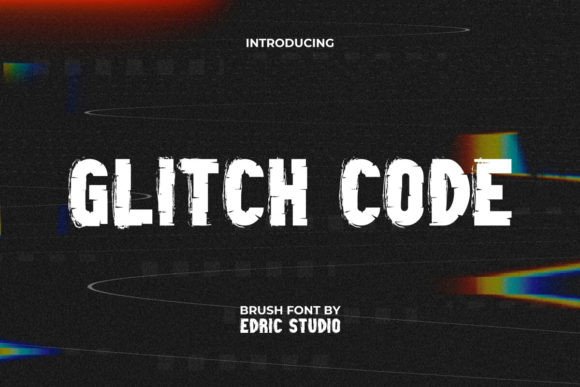
As a UI designer who ships high-conversion landing pages and brand-forward web apps, I reach for Glitch Code when I need a display font that lands with personality—without sacrificing digital clarity. Glitch Code Font is a techno sci-fi disco block display typeface designed by EdricStudio, and its signature glitch effect isn’t just decorative: it’s functional contrast, built for visual hierarchy and instant recognition. Though categorized under Script Handwritten, this isn’t a flowing cursive—it’s a bold, structured, digitally fractured Fonts family engineered for screen impact. Each character pulses with controlled distortion, making Glitch Code ideal for hero titles, interactive CTAs, and brand moments where you want users to pause, register, and remember.
Glitch Code for Landing Page Hero Sections and Conversion-Focused Layouts
In hero sections—especially for SaaS dashboards, creative tooling, or futuristic course platforms—Glitch Code delivers immediate tonal alignment. Its disco-block geometry reads cleanly at 48px+ on desktop and scales responsively down to 36px on mobile without losing legibility. Unlike many experimental Fonts, Glitch Code maintains character separation and consistent x-height, so “Start Free Trial” or “Launch Your Project” stays scannable even with motion overlays or parallax backgrounds. I pair it with Inter or Manrope for body copy—clean, neutral sans serifs that let the Glitch Code headline breathe and dominate attention. For conversion-focused layouts, that contrast between glitched authority and calm readability directly supports user decision-making.
Glitch Code for Online Store Banners and E-Commerce Brand Identity
If your online store sells tech accessories, limited-edition apparel, or digital art prints, Glitch Code reinforces niche credibility without leaning into cliché cyberpunk tropes. Used in banner headers (“New Drop Live”, “Glitch Edition — 24h Only”), it signals innovation and exclusivity while staying accessible—not alienating. As a Script Handwritten-adjacent display font, it bridges handmade authenticity and digital precision. On Shopify or WooCommerce themes, I apply Glitch Code to H1-level banners only—not product titles or price tags—preserving readability for scanning. It performs exceptionally well over dark mode backgrounds (use #0f0f1a base + subtle text shadow) and holds up against busy product photography when used with tight letter-spacing and generous line-height.
Glitch Code for Creative Portfolio Websites and Digital Brand Kits
Creative entrepreneurs—UI designers, motion artists, generative coders—use Glitch Code as a tonal anchor across portfolio sites and brand kits. Its sci-fi disco energy communicates forward-thinking craft, and because it’s not overly literal (no neon tubes or pixel decay), it avoids dating quickly. In Figma or Webflow, I use Glitch Code for section dividers (“Work”, “Process”, “Contact”), animated subtly on scroll with CSS clip-path transitions. For downloadable brand kits, Glitch Code works as a secondary logo lockup or accent type—never primary body—but always paired with a highly legible sans serif like Space Grotesk or IBM Plex Sans. That pairing satisfies both editorial polish and digital utility.
Glitch Code for Blog Headers and Editorial Web Experiences
On content-heavy sites—think developer newsletters, design blogs, or indie tech publications—Glitch Code adds editorial rhythm without compromising accessibility. I reserve it for H2 blog headers (“Why Glitch Typography Is Reshaping UX Writing”) and avoid using it for pull quotes or long paragraphs. Its block structure ensures strong contrast against light/dark backgrounds, and the glitch effect remains legible at 28–32px with 1.3 line-height. Crucially, Glitch Code Font includes OpenType features and webfont-ready WOFF2 files—so it loads fast and renders consistently across Chrome, Safari, and Firefox. No fallback jank. Just crisp, intentional presence.
Glitch Code for App Screens and Mobile-First UI Components
In mobile app interfaces—especially for music apps, AR tools, or crypto dashboards—Glitch Code shines in status bars, feature cards, and onboarding modals. At 20–24px on iOS and Android, its high-contrast glyphs remain distinct even on smaller viewports. I never use it for buttons smaller than 44px tall, but for full-width CTA banners (“Unlock Beta Access”, “Sync Your Devices”), it drives action through visual tension. Because Glitch Code is a display font—not a Script Handwritten body type—I treat it like a design asset: deployed sparingly, intentionally, and always with typographic breathing room. Its disco-block proportions also lend themselves well to icon-aligned text stacks in Figma component libraries.
Glitch Code Font Licensing for Client Projects and Commercial Use
All licensed versions of Glitch Code Font include commercial rights for websites, client deliverables, SaaS platforms, online stores, and digital templates—no hidden restrictions. Whether you’re embedding it via self-hosted @font-face, Google Fonts (if available), or Figma variables, the license covers unlimited pageviews and domains. For agencies, that means one purchase supports all client landing pages, pitch decks, and brand guidelines. And because Glitch Code is built as a modern Fonts family—not a single-weight novelty—it offers stylistic consistency across touchpoints: same tone in email headers, social banners, and web UI. No need to hunt for alternates or workarounds.
Glitch Code for Dark Mode Interfaces and High-Contrast Web Design
In dark mode layouts—increasingly standard for productivity and creative tools—Glitch Code gains extra dimension. The glitch effect interacts dynamically with subtle background gradients or noise textures, creating depth without sacrificing clarity. I recommend using it at 90–100% opacity on true black (#000000) or near-black (#0a0a0f) with a 1px soft white text-shadow for edge definition. It pairs especially well with monospace body fonts (JetBrains Mono, Fira Code) for dev-facing interfaces, reinforcing its techno-sci-fi roots while keeping code snippets and documentation fully scannable. That synergy makes Glitch Code more than aesthetic—it’s part of the information architecture.